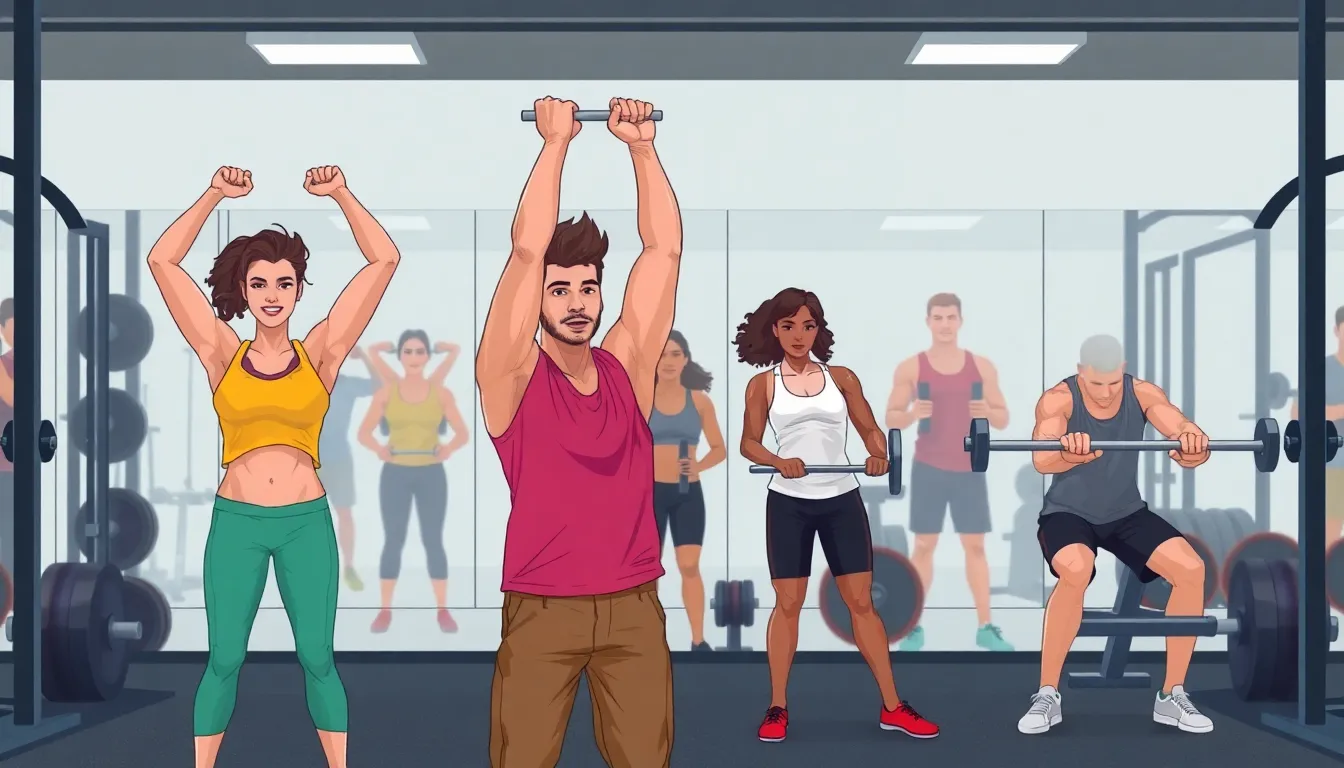
When it comes to crafting the perfect workout, pairing muscle groups is like matchmaking for your body. You wouldn’t throw a party and invite the introverts and extroverts without a plan, right? Similarly, knowing which muscle groups to tackle together can elevate your fitness game and keep those gains coming.
Understanding Muscle Groups
Understanding muscle groups is crucial for optimizing workout routines. Pairing them thoughtfully enhances fitness outcomes.
Major Muscle Groups Overview
Major muscle groups include the chest, back, legs, shoulders, arms, and core. Focusing on these groups provides a balanced approach to fitness. Chest workouts engage pectoral muscles, boosting upper body strength. Back exercises target latissimus dorsi and trapezius muscles, improving posture and stability. Leg workouts strengthen quadriceps, hamstrings, and calves for enhanced mobility. Shoulder exercises develop deltoids and rotator cuffs, promoting upper body strength and range of motion. Core workouts focus on abdominal and oblique muscles, enhancing stability and overall athletic performance.
What Muscle Groups to Workout Together
Working muscle groups together optimizes training efficiency. Compound exercises activate multiple muscle groups simultaneously, providing time-efficient workouts. For example, squats engage the legs and core, while bench presses work the chest and triceps. Combining muscle groups improves overall strength and promotes balanced muscle development. Furthermore, alternating between upper and lower body muscle groups allows for adequate recovery time. This approach enhances endurance and increases overall workout intensity, driving greater fitness results over time.
Push workouts target muscles involved in pressing movements, such as the chest, shoulders, and triceps. Pull workouts, on the other hand, focus on pulling actions, engaging the back and biceps. Alternating these workouts allows adequate recovery for targeted muscle groups while promoting overall strength gains. For example, focusing on pushing exercises one day, such as bench presses or shoulder presses, followed by pulling exercises like rows or pull-ups the next day maximizes training effectiveness. This strategy prevents fatigue and facilitates muscle growth, ensuring continuous progress.
Upper and Lower Body Workout Split
An upper and lower body split promotes an effective training routine. Upper body workouts emphasize chest, back, shoulders, and arms, while lower body routines concentrate on legs and glutes. This method provides ample recovery time for each area. For instance, a two-day split can involve training the upper body on Monday and the lower body on Tuesday, resting on Wednesday for recovery. Such a split allows individuals to target larger muscle groups effectively, building strength and stability over time. Implementing this approach ensures balanced development while minimizing the risk of overtraining.
Sample Workouts for Muscle Groups
Sample workouts can optimize training outcomes by effectively pairing muscle groups. These routines maximize strength gains and promote balanced development.
Full Body Workout Routine
Full body workouts incorporate various muscle groups in each session. Schedule three times weekly to allow for recovery. Begin with squats to target legs and glutes. Follow with push-ups for the chest and triceps. Include bent-over rows to engage the back. Finish with planks for core stability. This approach enhances overall strength while minimizing workout duration.
Targeted Split Training Plans
Targeted split training divides workouts by muscle groups over several days. One example includes an upper body day focusing on chest, back, and shoulders. On lower body days, focus on quads, hamstrings, and calves. Accessory work on upper body days could include bicep curls and tricep dips. Leg extensions and calf raises serve as additional lower body exercises. This structure promotes targeted intensity and adequate recovery.
Factors to Consider When Pairing Muscle Groups
Pairing muscle groups effectively requires careful consideration of various factors.
Experience Level
Experience level significantly influences workout choices. Beginners often benefit from focusing on major muscle groups, allowing for foundational strength. Intermediate trainers can incorporate more complex pairings, enhancing muscle engagement and growth. Advanced lifters usually prioritize specificity, targeting muscle groups that complement each other effectively. Tailoring workouts to experience ensures safety and maximizes effectiveness, facilitating progress in strength and endurance.
Training Goals
Training goals dictate how individuals structure their workouts. For muscle gain, pairing complementary muscle groups like chest and triceps promotes synergy during compound exercises. A focus on fat loss may require full-body workouts, engaging multiple groups for calorie expenditure. Endurance training supports the combination of opposing muscle groups, enhancing overall stamina. Identifying specific fitness goals helps in selecting suitable muscle pairings, optimizing results, and maintaining motivation throughout the training journey.
Conclusion
Pairing muscle groups effectively is essential for maximizing workout efficiency and achieving fitness goals. By understanding how different muscle groups interact and focusing on structured routines, individuals can enhance strength, promote balanced development, and minimize the risk of injury. Whether opting for push and pull strategies or full body workouts, thoughtful combinations can lead to significant improvements in performance and endurance.
Tailoring workouts to personal goals ensures that each session remains engaging and productive. With the right approach, anyone can make consistent progress and enjoy the journey toward a healthier, stronger body.